Ease On Down: What The Wiz Taught Me About Coming Back to Myself
There is a particular kind of lost that doesn't look like lost.
You're still showing up. Still functioning. Still smiling at the right moments and saying the right things. But somewhere underneath all of that performance, something quiet and essential has gone dim. You don't notice it happening — that's the thing nobody warns you about. The drift is so gradual, so ordinary, that by the time you feel it, you've been gone for a while.
I watched *The Wiz* recently — really watched it — and something cracked open.
---
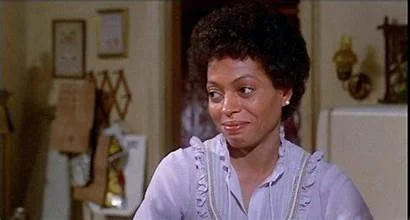
I'd seen it before, the way most of us have. As a cultural artifact. As spectacle. As music and memory and Diana Ross in silver. But watching it as an adult, with different eyes and a different life behind me, I stopped receiving it as entertainment and started receiving it as a message. One that felt less like it was made for a general audience and more like it had been waiting, specifically, for me to be ready.
*The Wiz* is not a children's story. It never was.
It is a story about what happens to a person — a woman — when the world slowly dismantles her connection to herself. Her thinking. Her feeling. Her ability to simply *do* without the weight of fear pressing down on every choice. And it is a story about the long, disorienting, necessary journey back.
---
Dorothy doesn't leave on purpose. She gets pulled out of everything familiar by a force she didn't ask for and couldn't control. That detail matters. Because in my experience, the journey back to yourself rarely begins with a brave decision. It begins with a disruption. A moment where the life you'd been carefully maintaining suddenly can't hold its shape anymore. Not a dramatic collapse — just a quiet internal knowing. *Something has to change.* You don't know what yet. You just know.
And so you start moving.
---
What struck me most rewatching this film was the companions Dorothy gathers along the way, and what they actually represent.
The Scarecrow has been told, and has come to believe, that he has no brain. Not because it's true — but because his environment never once reflected his intelligence back to him. He has internalized the absence of affirmation as evidence of absence itself. I know that feeling. The slow way you stop trusting your own instincts when the world around you consistently overrides them. When you learn to defer. When your own thinking becomes the first thing you second-guess.
The Tin Man is convinced he has no heart — and yet he weeps. Constantly. He is perhaps the most emotionally alive character in the entire film, and he cannot see it. He has been so conditioned to believe that his feelings don't count, don't qualify, don't measure up to some standard of real emotion, that he has built an entire identity around their supposed absence. I have been the Tin Man. Feeling everything and trusting none of it.
The Lion knows he is afraid. He just thinks that means he is broken. He doesn't yet understand that courage was never the absence of fear — it was always the decision to move anyway. To do the thing while your hands are shaking. I have stood at the edge of my own life, paralyzed, waiting to feel ready. Waiting to feel brave enough. Not understanding that the doing *was* the bravery.
All three at different points. All three, if I'm honest, sometimes at the same time.
---
Then there are the witches. And this is where the film becomes something spiritual to me.
Miss One — the first guide — is older, a little scattered, honest about the limits of what she can do. She tells Dorothy plainly: *I'm too old, my powers don't work the way they used to.* I used to hear that as defeat. Now I hear it as wisdom. There is a certain kind of elder whose power has shifted from sharp and precise into something softer and more atmospheric. She can't perform miracles anymore but she can *see* you. She can point you in the right direction. She knows which shoes matter. There is a sacred role in that — the guide who has lived long enough to lose her edge and gain her sight.
Evillene rules through fear, and her subjects are adults — fully formed, fully conditioned, no longer questioning the system they labor inside. They don't stay because they are weak. They stay because the conditioning has gone so deep it no longer feels like conditioning. It just feels like reality. This is the most frightening thing in the film to me. Not the monsters. Not the darkness. The people who stopped asking questions so long ago they forgot there were questions to ask.
And then there is Glinda. Surrounded not by peers or disciples — but by infants. Tiny, knowing, unfiltered souls who haven't yet learned to doubt what they feel or shrink what they know. Glinda sits at the intersection of the very old and the very new — people who are closest to truth because they've either not yet forgotten it or have finally remembered it. She doesn't give Dorothy anything. She reveals what Dorothy already had. And she couldn't have appeared any earlier in the journey. Dorothy wasn't ready. You cannot receive the truth about your own power before you've done the work of wanting it back.
---
There is a scene in the subway — dark, disorienting, full of things designed to terrify — and it is the Lion who nearly breaks there. Because the traps in life are not random. They find your specific wound. They know exactly which fear to wear.
The poppy girls find the Lion, not the others, for a reason. Seduction, distraction, the sweet fog of numbing pleasure — these things are most effective on the one who is most desperate for relief from his own anxiety. The systems that dull us don't attack us with blunt force. They arrive looking like rest. Looking like reward. Looking like finally, something that feels good.
I've had my poppy fields. Most of us have.
---
What I keep returning to is this: every single thing Dorothy needed, she had before she left home.
The slippers were on her feet from the beginning. The way back was always available. What she didn't have — what the journey gave her — was the *knowing*. The lived, embodied, hard-won certainty that she was enough to trust. That her instincts were real. That her feelings counted. That she could act.
The Wiz himself turns out to be ordinary. A man behind a curtain, amplifying his voice, manufacturing authority. Power, so often, is just successful performance sustained long enough that everyone agrees to believe in it. The moment you stop agreeing, the curtain falls.
---
My own return to myself didn't begin with a decision. It began with a whisper I kept trying to ignore until I couldn't anymore. A knowing so quiet it was almost easy to dismiss — except that it wouldn't leave. It just waited. Patiently. The way truth tends to.
I didn't have a yellow brick road. I had ordinary days and uncomfortable realizations and the slow, unglamorous work of learning to trust myself again — my thinking, my feeling, my willingness to do — one small act at a time.
But I think about Dorothy clicking those heels. Not because a spell is being cast. But because the act of choosing to go home, choosing yourself, has to be done deliberately. Out loud. Three times if necessary. Until the body catches up with the decision the soul already made.
*There's no place like home.*
And home, it turns out, was never a place.
It was always this — the self you were before the world told you who to be instead. The one who knew things before she was taught to doubt them. The one who felt freely before she learned to edit herself. The one who moved without waiting for permission.
She was there the whole time.
Ease on down. She'll meet you on the road.